
9 Best Hopscotch Alternatives & Competitors in 2026 (for user onboarding)
This article compares 9 Hopscotch alternatives, ranging from user onboarding tools for small businesses to enterprise digital adoption platforms. Each one gets a summary of pricing, strengths, and weaknesses. We’ll also go into when Hopscotch is the right pick.
FlowNavi: Affordable product adoption software without feature gating
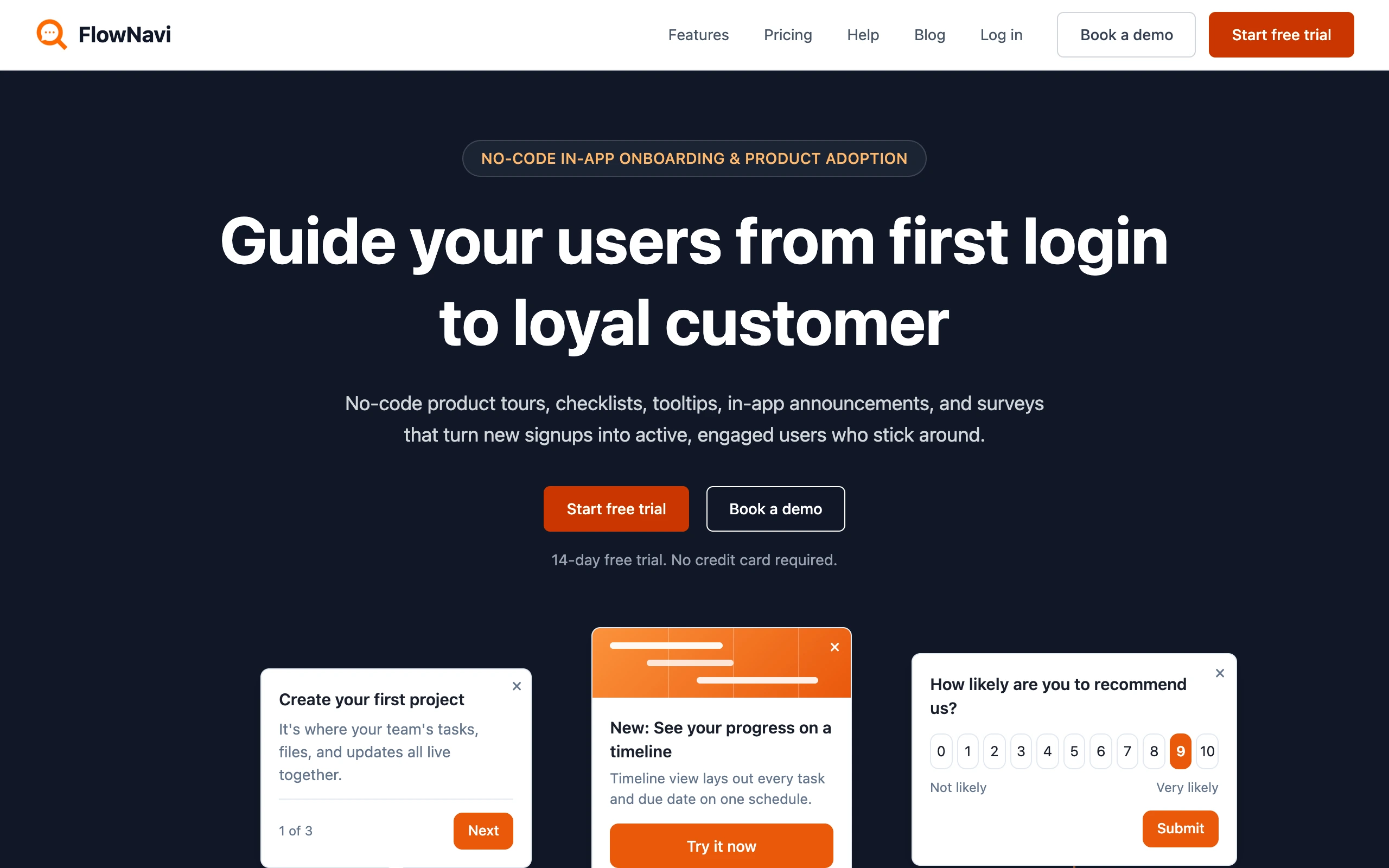
FlowNavi is a no-code product adoption tool: product tours, checklists, tooltips, hotspots, in-app announcements, and NPS and custom surveys. The difference from Hopscotch is that it doesn’t gate features by plan. Every feature is on every tier.
Pricing. From $79/month, with a free trial available.
What it does well. You don’t pay extra to unlock advanced targeting or surveys the way Hopscotch makes you jump to its $249 Growth tier. After initial setup, it is genuinely no-code. A PM or CS person can ship guides in a day or two, and pricing scales smoothly with your user count.
Where it falls short. It’s web only, like Hopscotch (no mobile SDKs). And two things Hopscotch offers, FlowNavi doesn’t: integrations to analytics tools like GA4 and Mixpanel, and an in-app help widget for users to self-serve.
Best for. SMB and mid-market SaaS teams that want every feature at a low, predictable price, without tier-gating.
Disclosure: FlowNavi is our own tool.
HelpHero: The cheapest, most barebones option
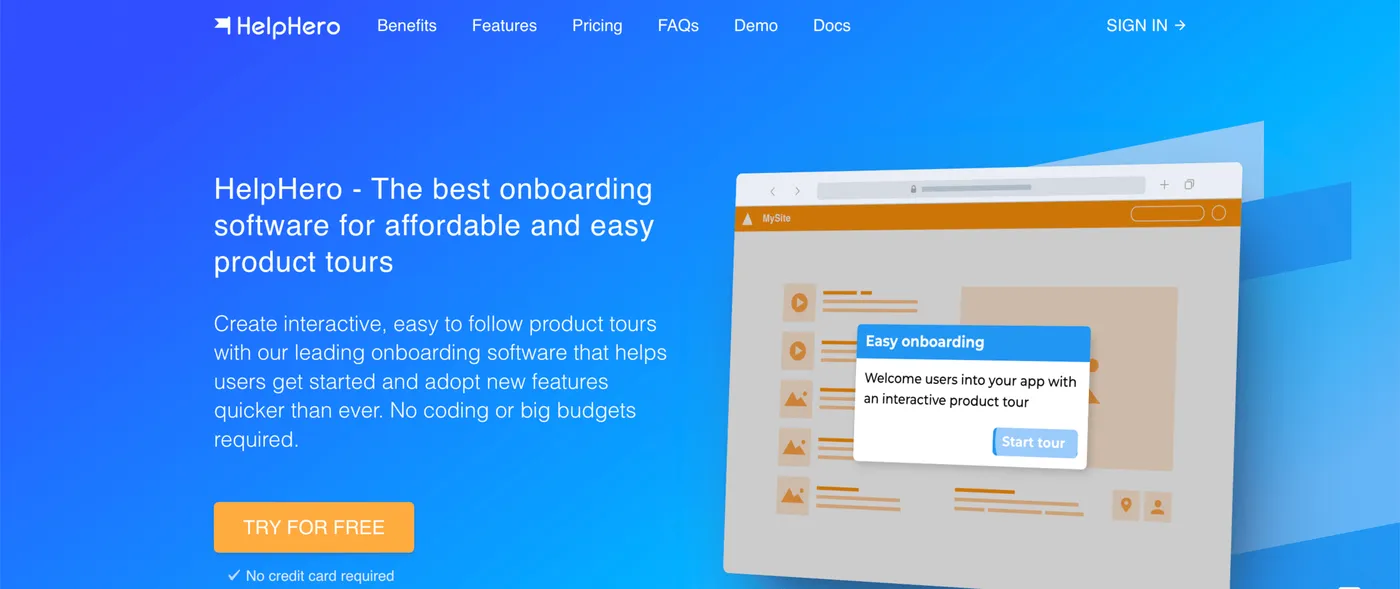
HelpHero is the most pared-back tool here and the cheapest. It covers product tours, tooltips, and checklists through a no-code editor and keeps the scope tight.
Pricing. From $55/month for up to 1,000 monthly active users, with a free trial.
What it does well. It undercuts Hopscotch’s $99 entry price, and there’s almost nothing to learn. Every plan includes custom styling, audience targeting, and multi-page tours, with no cap on how many tours, checklists, or team members you add. If the whole job is “put a guided tour in our app,” it’s the most direct route to it.
Where it falls short. Surveys are thin and analytics are basic. Both are weaker than Hopscotch, which at least offers NPS and CSAT surveys and event tracking on Growth. No email, push notifications, or mobile apps. The ceiling arrives fast once you need more than the onboarding basics.
Best for. Early-stage products whose only need is a simple product tour, where price is the deciding factor.
Product Fruits: Onboarding plus a built-in knowledge base and AI assistant
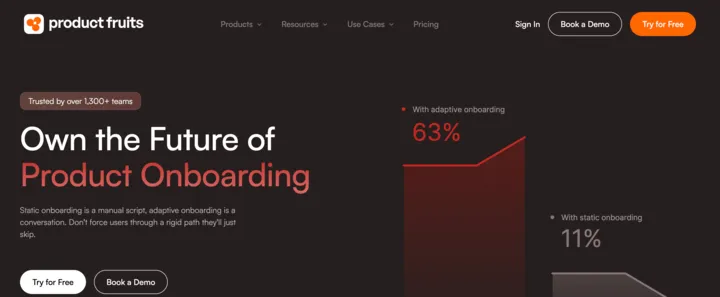
Product Fruits bundles more into one subscription than Hopscotch: product tours, an in-app knowledge base, NPS and surveys, in-app announcements, and an AI support assistant.
Pricing. From $111/month, with a free trial.
What it does well. You get onboarding plus a self-serve help center and an AI assistant that answers users’ questions from your help articles, so common how-do-I questions get handled before they reach support. Per their FAQ it also has an iOS mobile SDK, which Hopscotch has no answer for since it’s web only.
Where it falls short. The entry plan carries firm caps (15 tours, 50 hints, 2 checklists, 3 seats, one language), so a growing team climbs tiers before long. Analytics stay focused on onboarding engagement rather than full product analytics, and Android isn’t covered.
Best for. Small SaaS teams that want onboarding plus a knowledge base and an AI assistant in one place.
UserGuiding: A broad onboarding bundle with a knowledge base
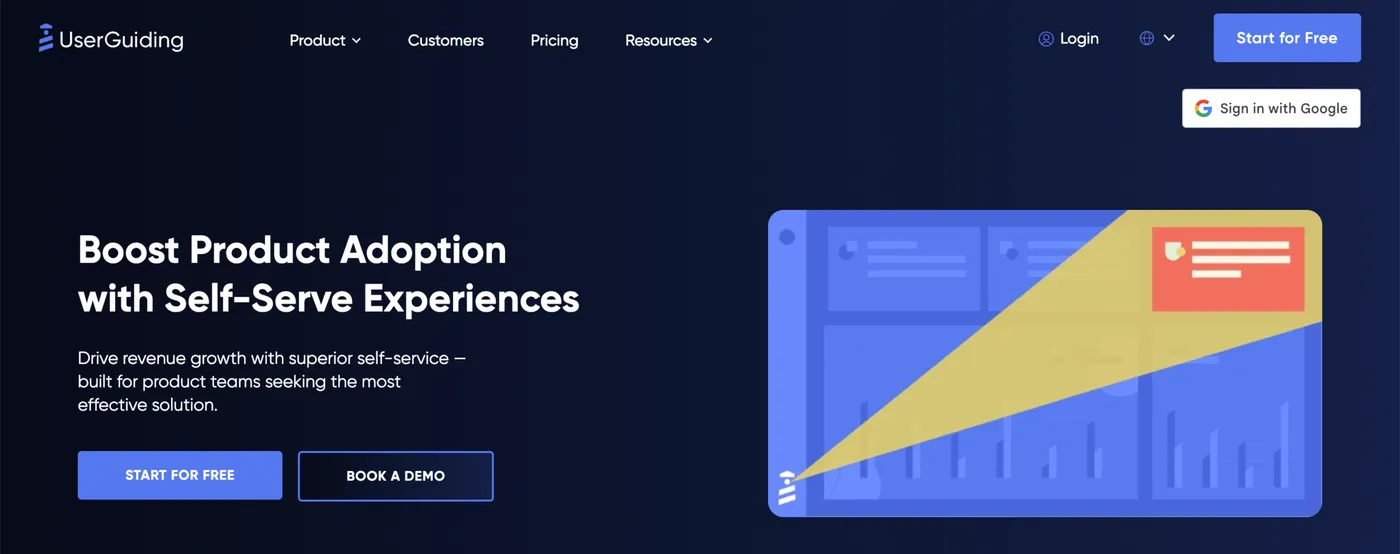
UserGuiding is the widest bundle here: product tours, tooltips, checklists, surveys, NPS, a knowledge base, an AI assistant, and a product updates page in one subscription.
Pricing. From $249/month, with a free trial.
What it does well. A lot arrives in one subscription: onboarding flows plus a full help center, surveys, NPS, and a release-notes page, pieces teams often buy separately.
Where it falls short. The entry plan allows one checklist and one survey. Styling is limited until the higher plan that adds custom CSS, so tours can look bolted on rather than native. Starter analytics are basic, and there’s no email, push notifications, or mobile apps. At $249 it costs two and a half times Hopscotch’s entry price.
Best for. Teams that want an established onboarding tool paired with a knowledge base and help center.
For a deeper dive, see our 10 UserGuiding alternatives compared.
Userpilot: Product adoption and product analytics in one platform
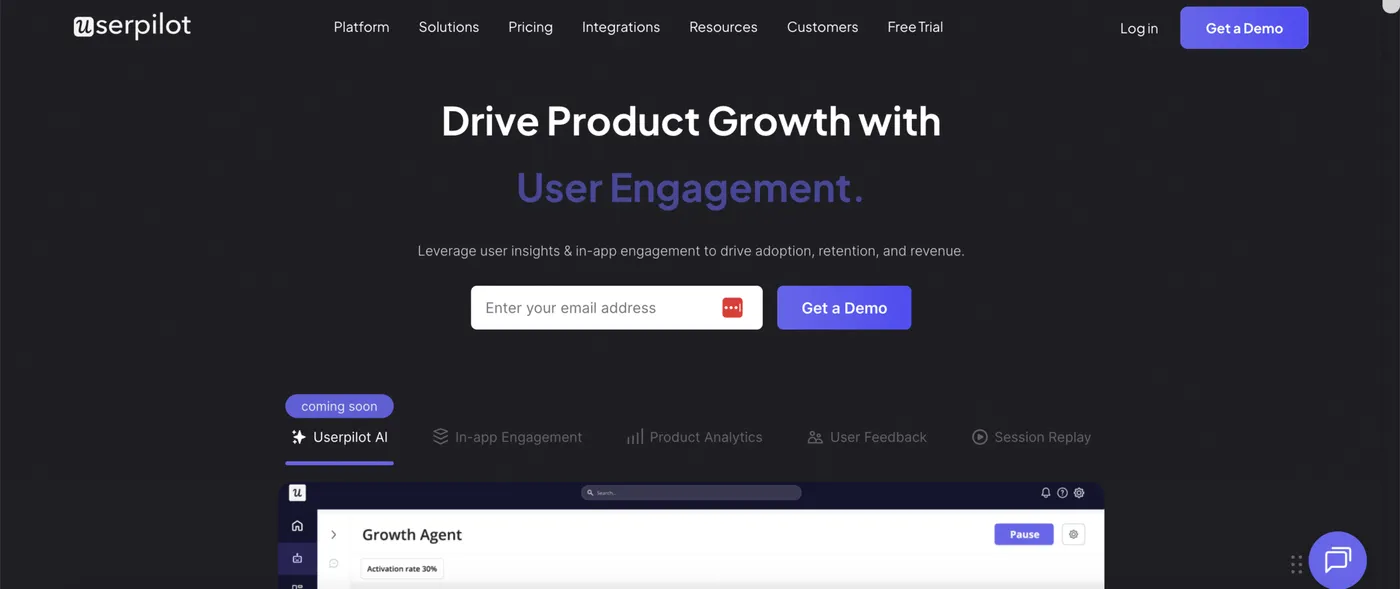
Userpilot pairs product adoption (flows, checklists, tooltips, surveys) with product analytics (funnels, retention, paths) in one tool, the analytics depth Hopscotch doesn’t reach.
Pricing. From $299/month for 2,000 monthly active users, billed annually. Vendr puts the median contract at about $18,000/year. Free trial available.
What it does well. You get onboarding and real product analytics from one subscription instead of buying two. Where Hopscotch’s analytics stop at tour completion and event tracking, Userpilot gives you funnels, retention, and paths to see where users actually drop off.
Where it falls short. Features gate by tier: funnels, retention, paths, session replay, and A/B testing need the Growth plan, which starts at $849/month, and mobile SDKs are a paid add-on. The entry scope is narrower than $299 implies, and it costs roughly three times Hopscotch’s entry price.
Best for. SaaS teams that want product adoption and product analytics in a single mid-market tool.
Appcues: multi-channel product adoption platform
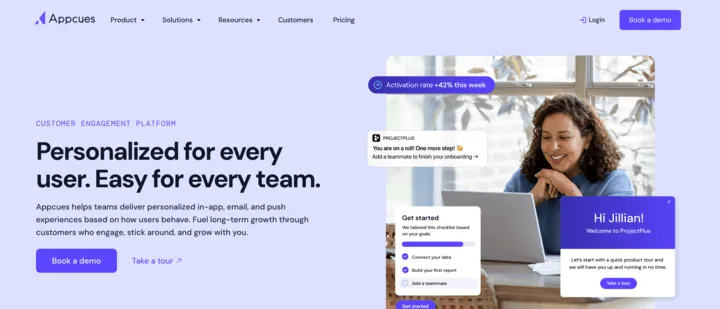
Appcues does product adoption beyond the in-app moment. Alongside tours, checklists, and tooltips, it sends behavioral email and push notifications and runs on mobile, reach that Hopscotch’s web-only tool can’t match.
Pricing. Custom, all tiers sales-led. Vendr puts the median contract at about $15,000/year. Every plan includes the full feature set. Free trial available.
What it does well. One platform handles in-app experiences, behavioral email, and push notifications, so you can guide a user in the app and follow up by email when they go quiet. Nothing is gated by tier. Mobile SDKs mean guides run inside your iOS and Android apps, not just the browser.
Where it falls short. It’s sales-led with no public price and lands well above Hopscotch once you’re past a small user count. For a team that only needs in-app web tours, most of what you’re paying for sits unused.
Best for. SaaS teams that want to guide and re-engage users across in-app, email, and push notifications, or that have a mobile app.
Chameleon: highly customizable in-app experiences
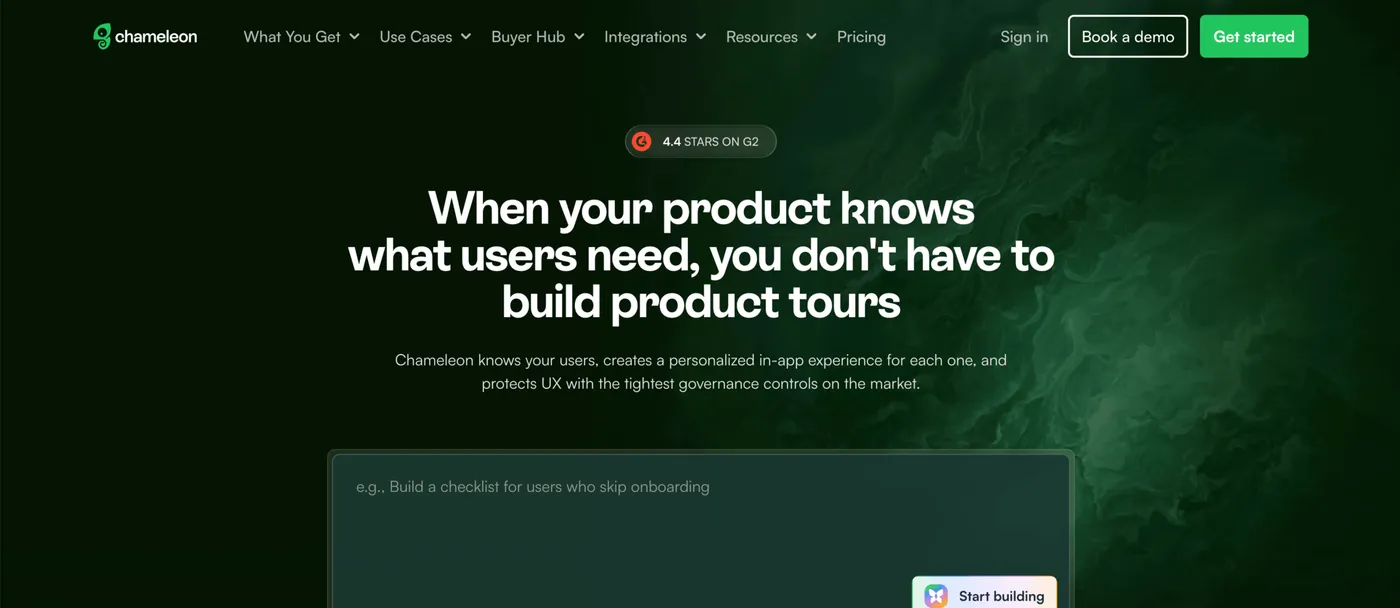
Chameleon focuses on making in-app experiences look native to your product and keeping them from piling up into bad UX, plus A/B testing, which Hopscotch doesn’t offer.
Pricing. From $279/month. Free trial available.
What it does well. Custom styling makes messages look built in. The guardrails are the differentiator: cap how many messages a single user sees, get alerted when an experience stops landing, and require an admin to sign off before changes reach users. A/B testing lets you prove what works, which you can’t do in Hopscotch.
Where it falls short. The $279 Startup plan caps you at 10 live experiences. Custom styling and A/B testing start on Pro at $750 a month, and unlimited experiences on Growth at $1,750 a month.
Best for. SaaS teams that want polished, tightly controlled in-app experiences and can grow into the Growth tier.
WalkMe: Enterprise digital adoption for guiding employees across internal apps
WalkMe is the enterprise heavyweight. It runs on the same building blocks as Hopscotch, like tours, tooltips, and in-app guidance, but is built and priced to roll them out at scale, typically to employees across a large portfolio of internal apps.
Pricing. Custom, no published price. Vendr puts the median contract at about $40,000/year, ranging from roughly $14,000 to $200,000+. Implementation is a separate, sizeable line item. No free tier or trial.
What it does well. One install guides employees across many apps at once: a single task touching Salesforce, an internal pricing tool, and a contract system can be guided from one place. It has the deepest cross-application workflow automation and the largest partner ecosystem in the category, and works on desktop, mobile, and web.
Where it falls short. It’s the heaviest to stand up, usually needing consultants, and its content can break when the underlying apps change. Modules are priced separately. For a small team that just needs in-app onboarding, it’s overkill and costs far more than anything else here.
Best for. Large companies rolling out internal software to thousands of employees who want one tool guiding staff across many apps.
Whatfix: Enterprise employee onboarding with practice simulations
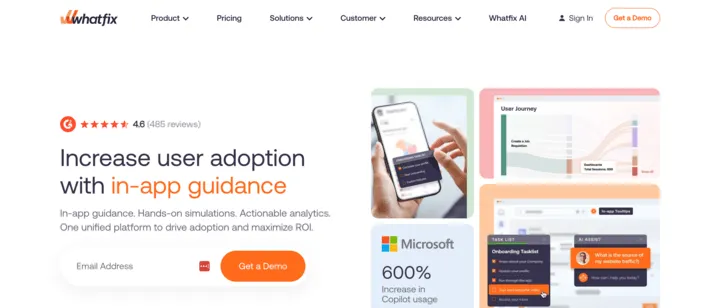
Whatfix is another enterprise digital adoption platform, aimed at large, often regulated organizations. Same building blocks as the tools above, optimized for rolling out onboarding to employees across internal software at scale.
Pricing. Custom, sales-led. Vendr puts the median contract at about $32,000/year. Free trial available.
What it does well. Its standout is practice simulations: it records an app’s screens as you click through a real process and turns them into a safe sandbox where employees rehearse before touching the live system, which matters for high-stakes workflows. Product analytics is bundled in, and it covers desktop apps and virtual desktops like Citrix, not just web.
Where it falls short. Enterprise pricing and rollout weight, far beyond Hopscotch. The entry tier caps integrations and imported help articles, and SSO sits on higher tiers.
Best for. Large enterprises training employees on complex internal software, especially where rehearsing on a safe copy before the live system matters.
When Hopscotch is the right pick
Comparing alternatives doesn’t mean Hopscotch is wrong for you. It stays a strong pick when you’re a small SaaS team that wants no-code, in-app onboarding on the web without paying enterprise prices.
Hopscotch’s real strengths are a low entry price ($99/month), no-code setup a marketing or CS person can run without a developer, and live support on every plan, which is rare at this price. Unlimited tours and in-app messages come on every tier, and there’s an in-app help widget users can open to find guides and support on their own. If your job is trial-to-paid conversion and cutting basic support tickets, and you don’t need mobile, deep analytics, or A/B testing, it does that job well.
It’s the wrong pick if you need to reach users on mobile apps or by email and push notifications (it’s web only), if you want funnels and retention analytics (its analytics stop at tour completion and events), or if you don’t want your better features, advanced segmentation, custom events, and integrations, locked behind the $249 Growth tier.
How to choose between them
Start with what pushed you off Hopscotch:
- Cheaper, or the same features without tier-gating: FlowNavi ($79) or HelpHero ($55)
- Onboarding plus a knowledge base and help center: Product Fruits ($111) or UserGuiding ($249)
- Deep product analytics like funnels and retention: Userpilot
- Mobile apps, or email and push notifications: Appcues
- Polished, tightly controlled experiences with A/B testing: Chameleon
- Enterprise employee adoption of internal software: WalkMe or Whatfix
Two things to check before you commit:
- Price the tier you’ll be on in a year, not today. Every web tool here bills by monthly users, and the headline rate covers a low count (1,000 to 3,000). Model the plan you’ll actually land on, not the one you sign up on.
- Don’t pay for reach you won’t use. The mid-market and enterprise tools cost more largely because they add mobile apps, email and push notifications, or cross-app employee guidance. If you only ever run in-app web tours, that budget sits idle.
Summary
| Tool | Best for | Starting price | Key strength |
|---|---|---|---|
| Hopscotch | Small SaaS, web onboarding | $99/mo | No-code tours with live support on every plan |
| FlowNavi | SMB and mid-market SaaS | $79/mo | Every feature on every plan |
| HelpHero | Early-stage products | $55/mo | Cheapest, simple tours and tooltips |
| Product Fruits | Small SaaS teams | $111/mo | Onboarding plus knowledge base and AI assistant |
| UserGuiding | Mid-market teams | $249/mo | Broad bundle with knowledge base and help center |
| Userpilot | Product teams | $299/mo | Product adoption plus product analytics |
| Appcues | Multi-channel and mobile teams | Custom (~$15k/yr) | In-app, email, push notifications, and mobile |
| Chameleon | Polished in-app UX | $279/mo | Customization with guardrails and A/B testing |
| WalkMe | Enterprise (employees) | Custom (~$40k/yr) | Cross-app employee guidance at scale |
| Whatfix | Enterprise (employees) | Custom (~$32k/yr) | Practice simulations |
FAQ
How much does Hopscotch cost?
Hopscotch has three plans, billed by monthly users (any unique visitor who loads a page carrying its script). Starter is $99/month for up to 1,000 users; Growth is $249/month for up to 3,000 and adds advanced segmentation, custom events, and integrations; Business is a custom quote. There’s a free trial but no free plan, and a card is required once you publish content live.
What’s the cheapest Hopscotch alternative?
HelpHero, at $55/month for up to 1,000 monthly active users, covering tours, tooltips, and checklists. FlowNavi is next at $79/month and includes every feature on every plan. Both come in under Hopscotch’s $99 entry.
Which Hopscotch alternative works on mobile apps?
Hopscotch is web only. For guides inside a native iOS or Android app you need mobile SDKs. Appcues (iOS and Android), the enterprise platforms WalkMe and Whatfix, and Userpilot (as a paid add-on) have them. Product Fruits covers iOS only. FlowNavi, HelpHero, UserGuiding, and Chameleon are web-focused.
Is there a free Hopscotch alternative?
Hopscotch itself is trial-only. The alternatives offer free trials rather than free plans. For developer-built tours, open-source libraries like Intro.js, Shepherd.js, and Driver.js are free, though your team builds and maintains the targeting and logic.
Which Hopscotch alternative has the deepest analytics?
Among the onboarding tools, Userpilot, with funnels, retention, and paths in the same tool as your guides. The enterprise platforms have analytics too (Whatfix bundles it in; WalkMe sells it as a separate module). Hopscotch’s own analytics stop at tour completion and event tracking, which is the most common reason data-minded teams leave it.